how cbse rewrote rules to favor coempt eduteck
hello, i am sarthak sidhant. i am a class 12th student of the year 2025-26, and i am one of the 17 lakh students that have been affected by the On Screen Marking system released by the Central Board of Secondary Education.
for the past few days, i have been investigating the On Screen Marking Evaluation Tenders issued by the CBSE. I feel that my findings are significant enough, and I would like to share them in the blog below.
This is a story of how a massive public institution deliberately played with students’ futures by rewriting its own rulebook.
btw this article gets very technical very fast but fear not I try my best to explain each term and I have also added a glossary section at the end of the article for your reference. The language these bureaucracies use is unnecessarily complicated, a way to keep people away from their business, but fret not for I have scoured the documents in and out.
In the class of 2025–26, over 17 lakh students registered under the Central Board of Secondary Education (CBSE) found their academic futures tied to a new digital grading system. On-Screen-Marking and Evaluation.
My Claim
My Thesis is that the Rules, Terms, Conditions, and Clauses, were rewritten, to favor a specific vendor. The Vendor happened to Coempt Edu Teck. This was done at the expense of national data security, and the future of students.
before we begin, I believe giving some background about Coempt Eduteck, which would be important later.
Background about Coempt Eduteck
Before winning the CBSE Tender, Coempt Eduteck was known as Globarena Technologies, this happens to be the same company behind the catastrophic, disgusting and vile, 2019 Telangana Intermediate exam fiasco.
Globarena’s Software, failed miserably, and massively. failing over 3.8 lakh students due to missing marks and other systemic discrepancies. 23 Students committed suicide because of this.
A committee appointed by the Telangana government found out that Globarena never actually signed a formal agreement with TSBIE, for the 4.35 crore project. the commitee submitting it’s report, citing “systemic failures, procedural collapse, and glaring negligence”
After this, Globarena changed their name to Coempt Edu Teck.
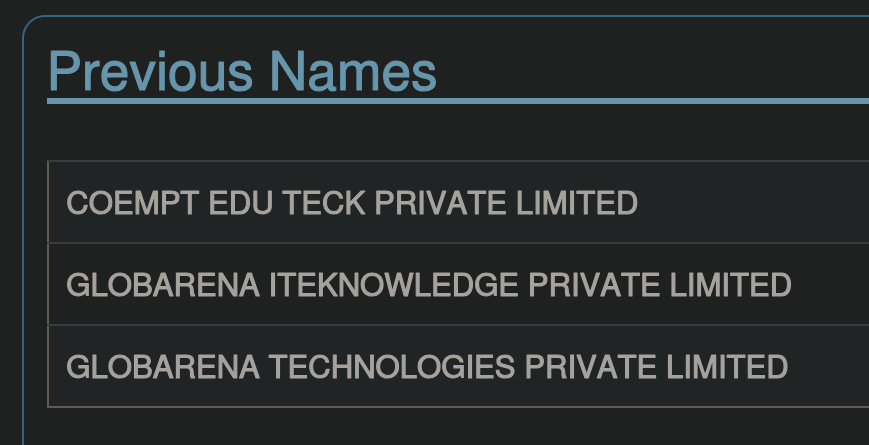
Now I think, CBSE should have done their due diligence and spotted this, and should’ve disqualified this company. But, as per my investigation, based on the tender documents I’ve read, I don’t think this was just a mistake. Let me explain.
Since CBSE is a public institution funded by public resources, it cannot simply select any private vendor of its choosing. It must issue a public Request for Proposal (RFP) to invite competitive bids.
This public bidding process ensures transparency in government. Since it is the taxpayer’s money that runs the government, it also prevents bribery.
The Tender Timeline
To understand how the procurement ecosystem was manipulated, look at the timeline of how CBSE kept changing the playing field when vendors failed to clear the bar.
The First Tender was Issued on 4th February, 2025.
I have the RfP for it, but I could not find the results on GEM portal. I scraped all 576 tenders that CBSE has, and I could not find the first tender here. It was completely wiped/unlisted from the public portal archive.
check out the entire 576 tender scrape of CBSE, in json format
The Second Tender was Issued on 2nd May 2025.
The Tender ID was: 2025_MHRD_858645_1

This Tender was cancelled. 4 bidders applied, It included both TCS and Coempt Eduteck.
All four failed technical evaluation, and the tender was cancelled. From now on, whenever I say Old RfP it means the RfP document of this Tender.
The Third Tender was Issued on 28 August 2025.
The Tender ID was: 2025_MHRD_875046_1
 Coempt Eduteck won this bid.
TCS, Coempt Eduteck, and Rankguru applied.
TCS and Coempt Eduteck were selected in the Technical Evaluation.
From Now on, whenever I say New RfP it means the RfP document of this Tender.
How the Entry Barriers were manipulated to ensure Coempt won the bid
This is me delving deeper into the Pre Qualifications criteria from the Old RfP and tracking changes into the New RfP.
1. Erasing the “Record of Poor Performance”
In the Old RfP, the board explicitly stated that a service provider would be instantly disqualified if a confidential inquiry or past record revealed an history of “abandoning work,” “not properly completing contractual obligations,” or “financial failures/weaknesses in any institution.”
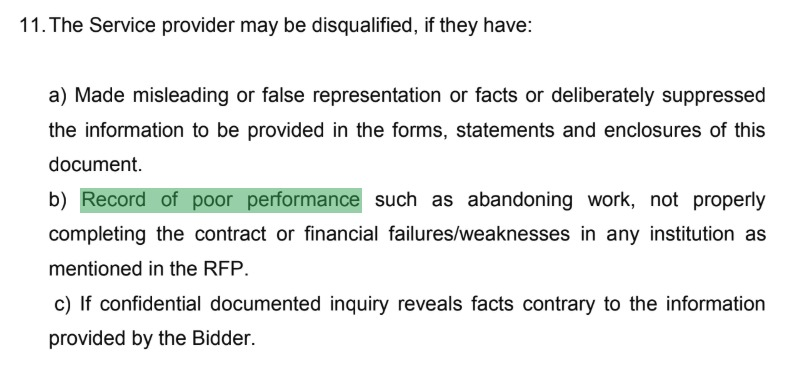
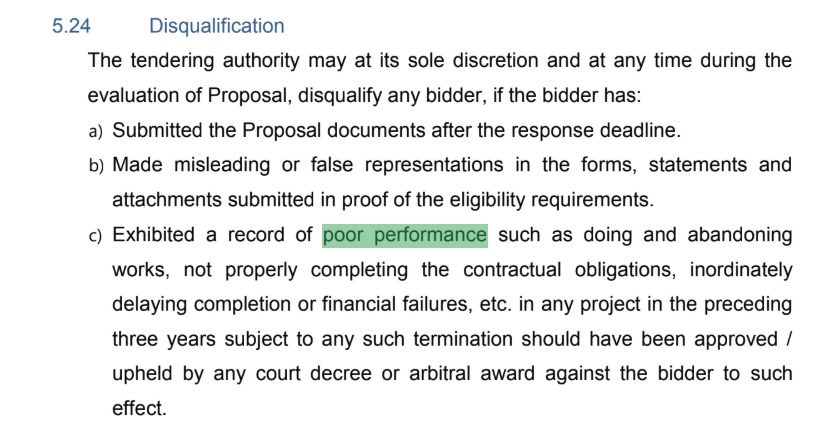
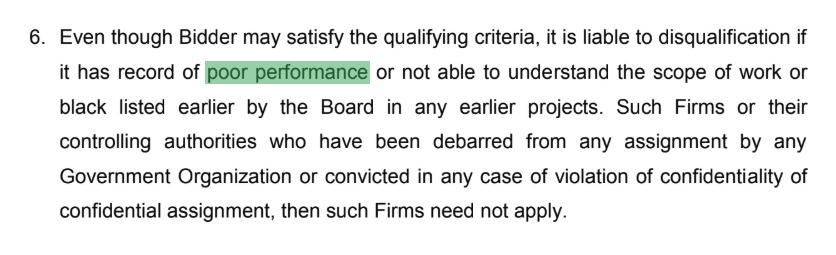
In the New RfP, these clauses were completely wiped out.
For the board, a track record of poor performance didn’t matter anymore.
If they had kept this clause, Coempt’s catastrophic operational history under the name Globarena in Telangana would have been a massive legal hurdle for their qualification.
2. The Blacklisted Clause Loophole
This is the Old RFP, Very clearly, in the General Terms and Conditions, It was mentioned that the Bidder is liable to disqualification if it has a record of poor performance, OR BLACKLISTED EARLIER BY THE BOARD, OR HAVE BEEN DEBARRED FROM ANY ASSIGNMENT BY ANY GOVERNMENT ORGANIZATION
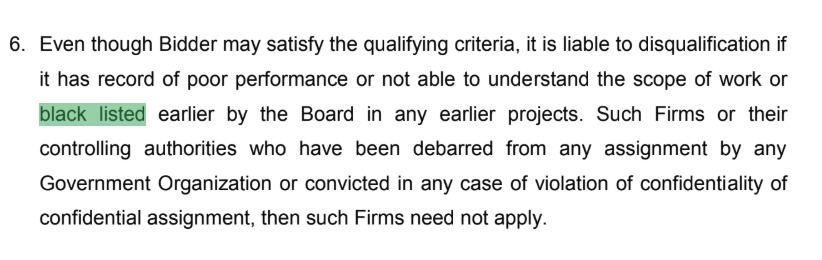
In the new RFP however, this requirement was subtly shifted to “currently blacklisted” in the Pre-Qualification Criteria
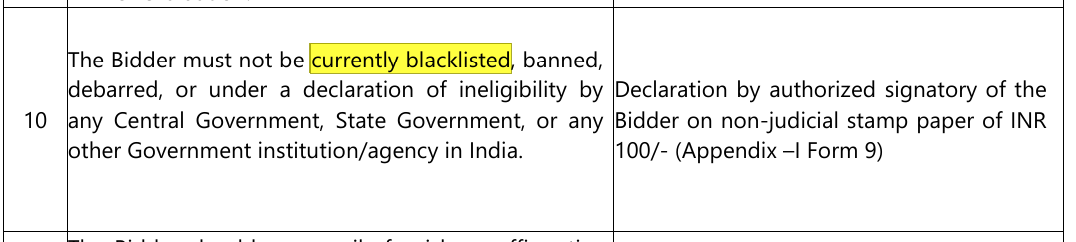
the difference went from “Blacklisted earlier” to “Currently Blacklisted” which is an interesting change,
why would the board want companies that have been blacklisted earlier?
Does it have something to do with the shady history of Coempt Eduteck?
Because Globarena rebranded to Coempt Edu Teck six months after the Telangana crisis, changing the requirement sanitized their history.
3. The ₹50 crore Turnover and the Razor Thin Margin
The RfP mandated that bidders must have an average annual turnover of at least ₹50 Crore over the last three financial years (FY 2022-23 to 2024-25) specifically from digital examination/evaluation services.
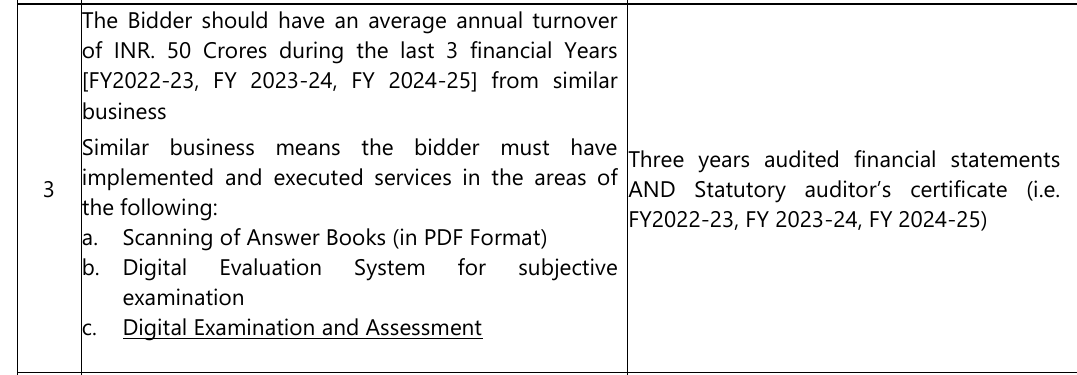
3 bidders bid for the new tender. Coempt Eduteck, Rankguru Technology Solutions and Tata Consultancy Services. I decided to dig in the financials of Coempt Eduteck and Rankguru Technology Solutions.
Let’s look at the financial profiles of the final competing companies:
- TCS: A massive multinational entity clearing this threshold by thousands of crores.
- Rankguru Technology Solutions: Clear three-year average of ₹117.56 Crore.

- Coempt Edu Teck: Independent financial statements show sales of ₹32.1 Cr (Mar-2023), ₹52.7 Cr (Mar-2024), and ₹67.8 Cr (Mar-2025). Their precise three-year average calculates to exactly ₹50.86 Crore.

The Razor thin Margin of less than 1.7% is suspicious, especially when in the old RfP’s Pre-Bid Clarifications, Shree Info Solution asked CBSE to keep the minimum eligible average annual turnover for last 3 years at Rs. 30 Cr. to promote fair competition, arguing that ₹30 Crore was already higher than the estimated project cost.
CBSE rejected them.
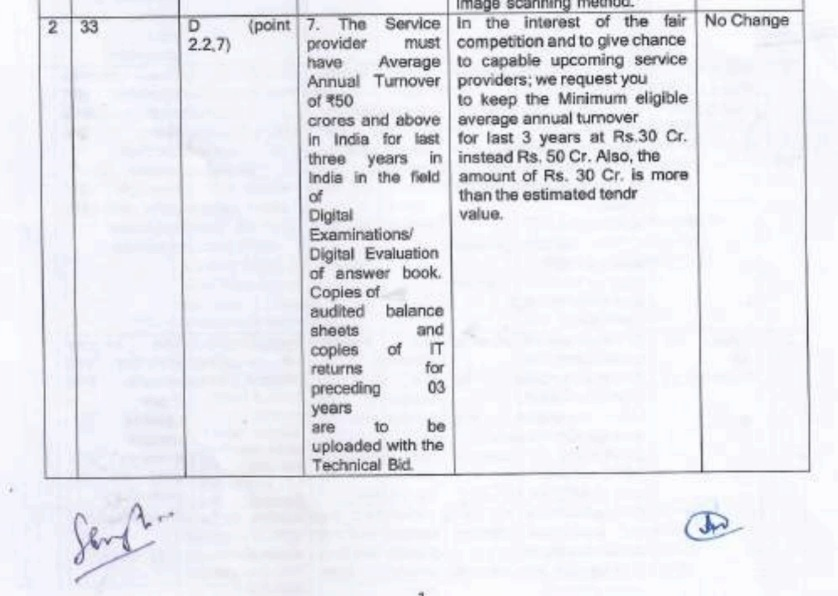
They did not want small players, but apparently, Coempt, who qualified it by a very thin margin, qualifies for it.
It indicates that CBSE’s eligibility parameters were not designed to seek out the most secure and mature software. Instead, the floor was held high enough to block smaller companies, while the ceiling was lowered precisely to fit the financial and technical limitations of Coempt.
4. Changing CMMI level from 5 to 3
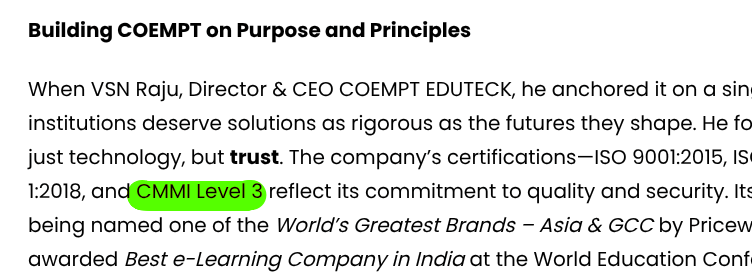
Software engineering quality is measured globally by CMMI (Capability Maturity Model Integration) levels.
in this “Free” Press Journal article praising VSN Raju and Coempt Eduteck for Revolutionizing the Examinations of India, The CMMI Level of Coempt Eduteck is reported as Level 3.
You won’t believe the CMMI requirements in the old RfP. (Pre Qualification Criteria)

and in the new RfP, the CMMI requirements were relaxed to Level 3. in the Pre Qualification Criteria
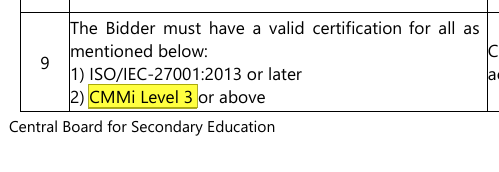
By dropping the bar from Level 5 to Level 3, CBSE opened the floodgates for a less mature software platform to manage millions of sensitive student records.
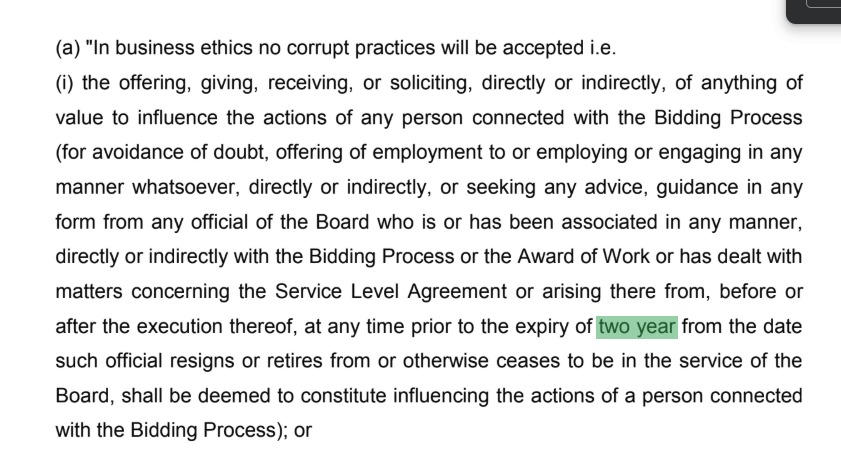
5. time frame of corrupt practices cooling off period being HALVED
In the old RFP, the “business ethics” clause dictated that engaging with former board officials would be deemed a corrupt practice up to two year after the official retired or resigned. The new RFP halved this window to just one year
Proof attached below:
Old RfP: Expiry of Two Years
New RfP: Expiry of One Year
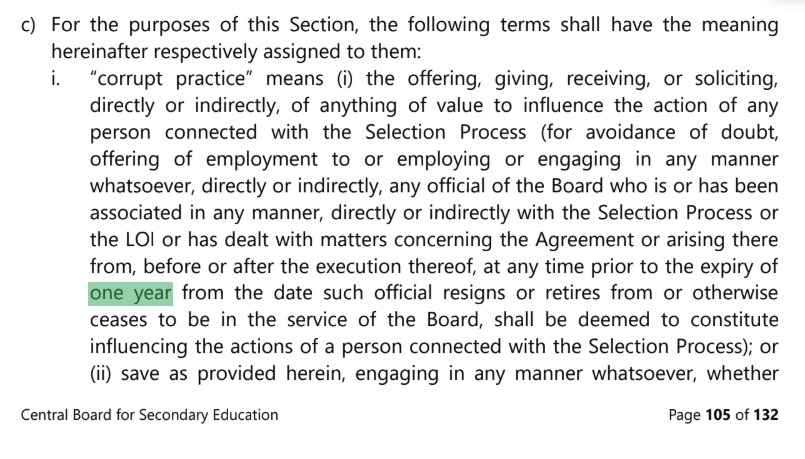
Why was this done? Everyone needs to know that.
Wouldn’t Shrinking the cooling-off period have had made it easier for the vendor to leverage recent insider connections or employ recently retired CBSE officials to influence the bidding process without violating the contract?
6. Project Criteria Changes
In the older RfP, the Pre Qualification Criteria had a clause where similar projects were required, where atleast 5 lakh students in each project was required.
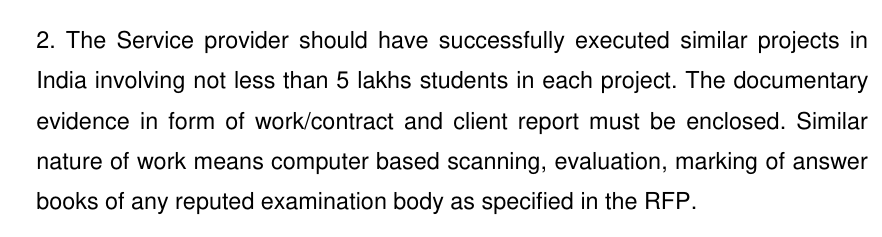
this project criteria was changed to Project Values, in the New RFP, it removed student count entirely and also moved to cumulative volume of Answer Books. This benefits Vendors who have smaller, fragmented University Contracts.
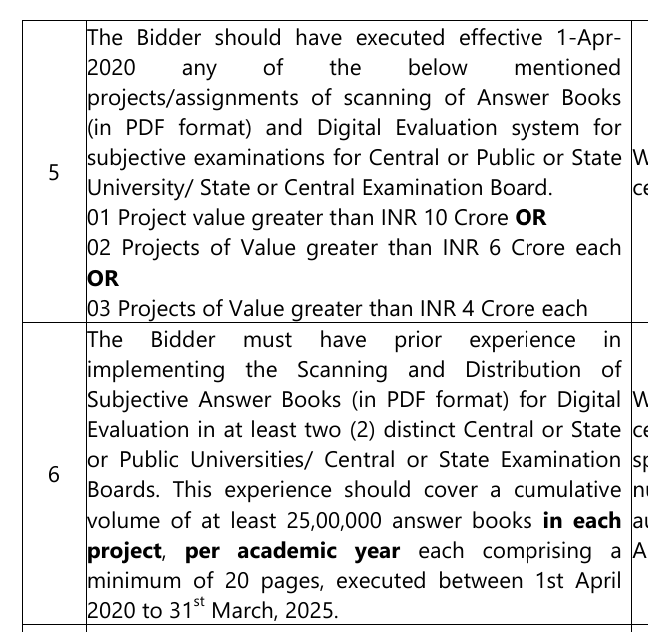
Coempt Eduteck happens to be a Vendor, with Smaller Fragmented University Contracts. This directly benefitted Coempt over industry giants like TCS.
7. Change in Hardware Ownership
In the older RfP, the bidder was reqired to have their own Data Center and Disaster Recovery Center
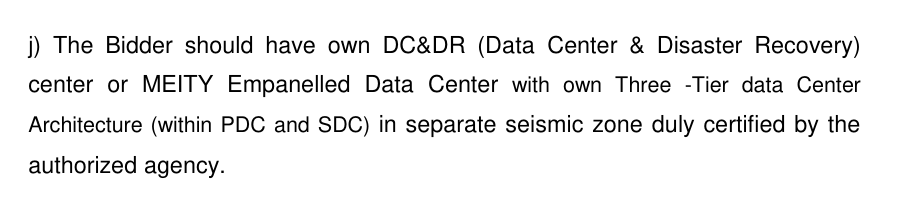
however, in the new RfP, the data center hosting should be MeitY empanelled, the requirement for owning them was removed.
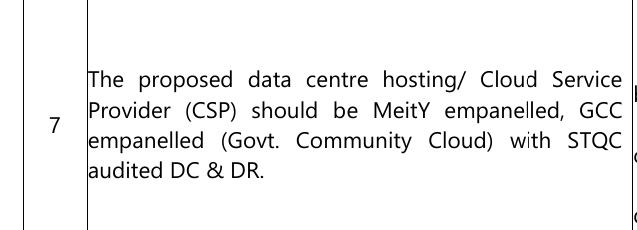
This helped Coempt Eduteck, since all their services are hosted on AWS, which happens to be MeitY Empaneled. It didn’t help TCS since TCS has their own data centers.
The Screenshot below shows the ASN and IP of where onmark (Coempt’s Platform) is hosted.
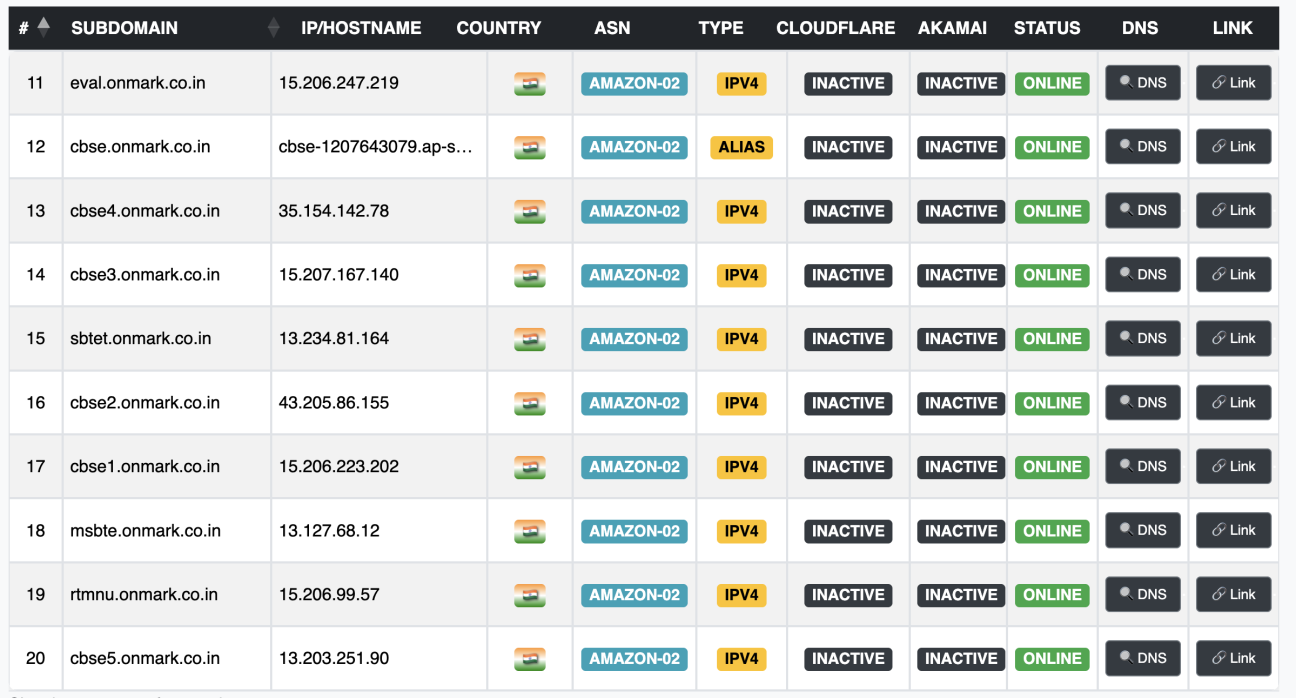
in the Old RFP, the service provider needed to insure local server deployment. However, this was deleted in the New RFP. Onmark is hosted on Azure, so this helped Coempt.

In the old RfP, the scoring Matrix heavily favoreed Massive IT Corporations by awarding 20 marks to bidders who actually owned their own Primary and Secondary Tier 3 Data Centers.
Bidders who merely used a third Party MeitY empaneled data center were penalizde receiving only 10 marks, in the new RfP, owning Servers does not matter anymore.
CBSE rewrote rules so that the data is not sovreign. so that the data is in an unsafe environment.
8. Change in Software Ownership
In the older RfP, the Service provider was required to own or have rights to access the complete source code of the software being used
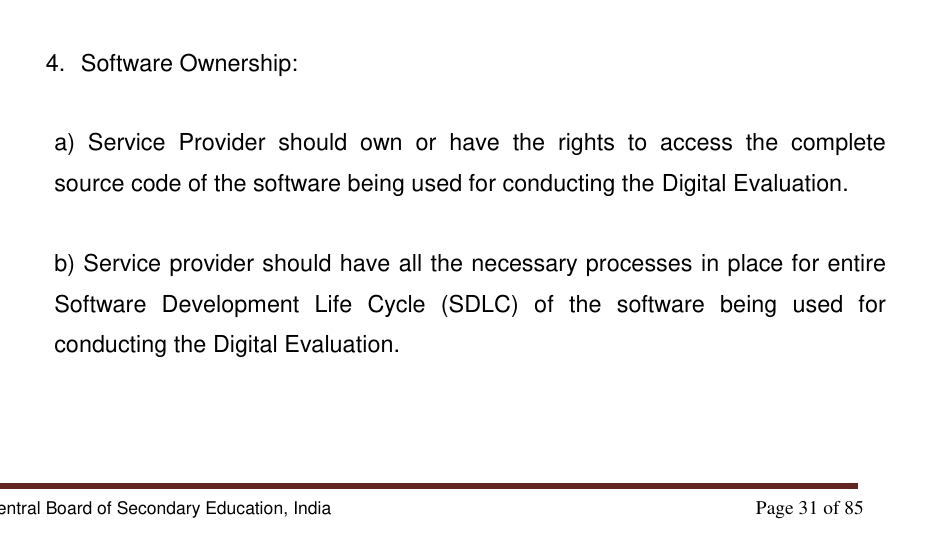
in the new RfP, this clause was deleted. instead this clause was added.

This allowed companies like Coempt, whose onmark platform uses IIS. Internet Information Service, is a proprietary software owned by Microsoft.
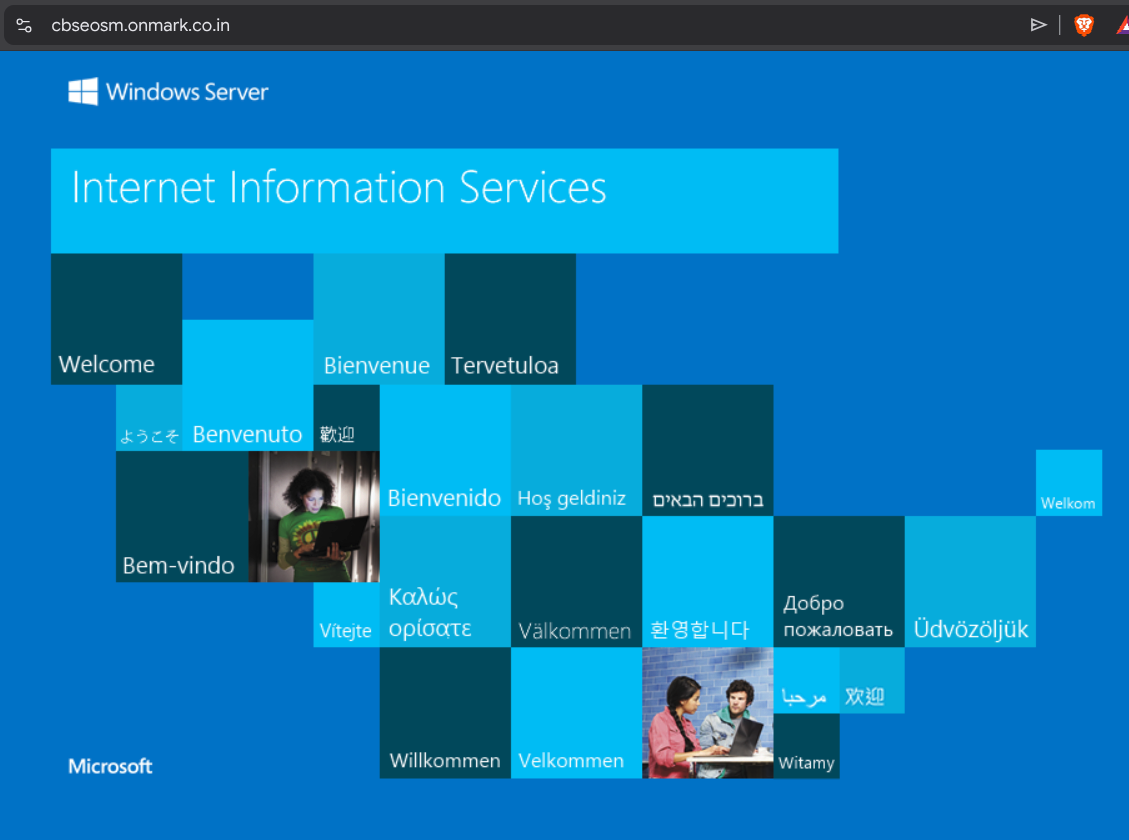
The CBSE allowed proprietary platforms. Coempt’s onmark was based on a proprietary platform.
CBSE rewrote the rules for Coempt’s Accessibility.
The Corrigendum that took away the power from CBSE to blacklist the firm
in the new RfP, CBSE reserved the right to blacklist the firm if any of the mistake from “Other Mistakes is repeated”
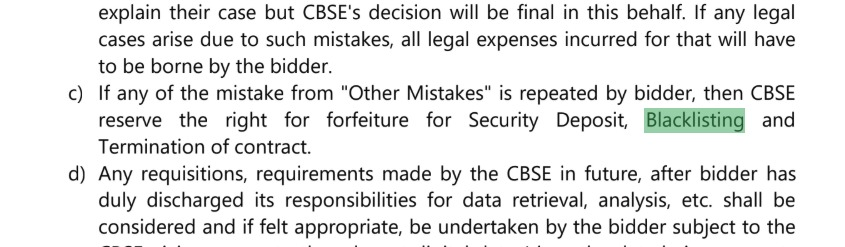
A Corrigendum was issued, right before the bid submission, which took away the right from CBSE to blacklist the firm.

This is a clearly deliberate removal of the word “Blacklisting”. By erasing blacklisting from the Penalty clause, the board ensured that even if Coempt’s software failed catastrophically, the company would not be legally banned from bidding of future lucrative government tenders.
Security Audits and a Word on CERTin
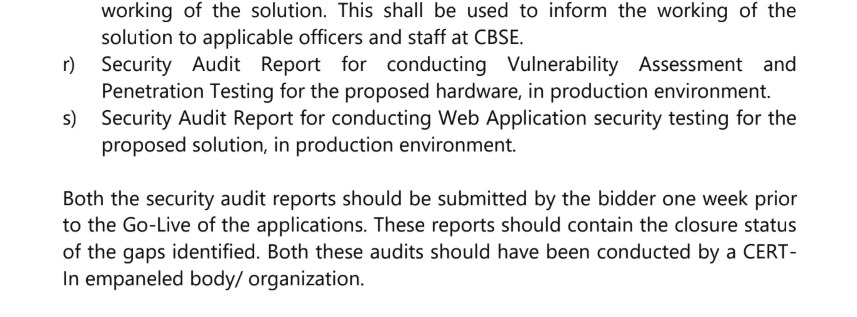
The Vendor Needed to show a VAPT (Vulnerability Assesment and Penetration Testing) for the proposed hardware in PRODUCTION ENVIRONMENT
The Security Audit reports should be submitted by the bidder one week prior to the go live of the applications. These reports should contain one closure status of the gaps identified. Both these audits should have been conducted by CERTin
there was a UAT phase, which was in the final pre launch window, the bidder was supposed to roll out a beta stage where the system would be RESTRICTED to users.
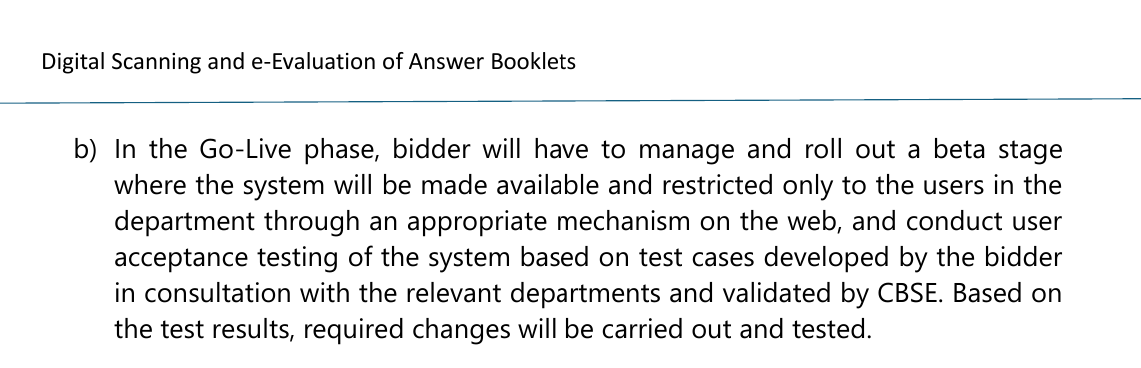
However, clearly, since Nisarga could access it, it wasn’t restricted. and based on this bundle found on wayback machine, on March 3rd, 4 days before Go-Live, there are clearly vulnerabilities in this, check nisarga’s post for this.
Coempt should have secured a VAPT from CERTin, as per the contract. was Coempt not able to perform a VAPT? Did they give them a wrong Audit? This should be investigated.
Score Matrix Manipulations
1. technical and operational capability being totally modified
in the old rfp, in section 2 of the Technical Evaluation Model, The Evaluation was done on the basis of Pages Scanned (IN A SINGLE ORDER)
and Value of Projects.
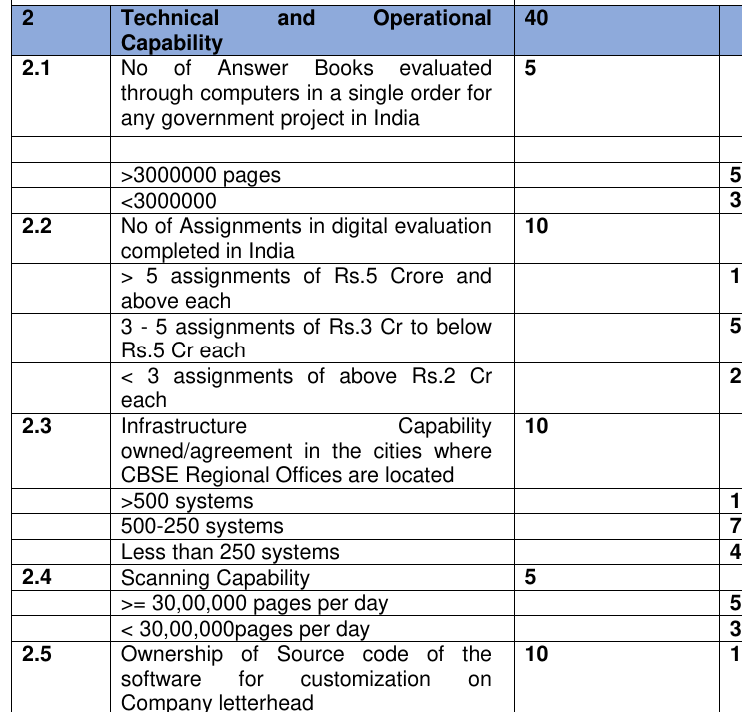
and in the new RfP, the Technical Evaluation Model was totally changed,
instead of pages, and number and Value of Projects (which was shifted to Pre Qualifying Criteria to limit the vendors applying) we instead are talking about booklets and answerbooks.
Instead of valuing project on the assignment price, they just get 1 and 2 Marks for each completed project, That is, more the projects the vendor has, no matter how small, they get 1-2 marks. this again benefits fragmented vendors.
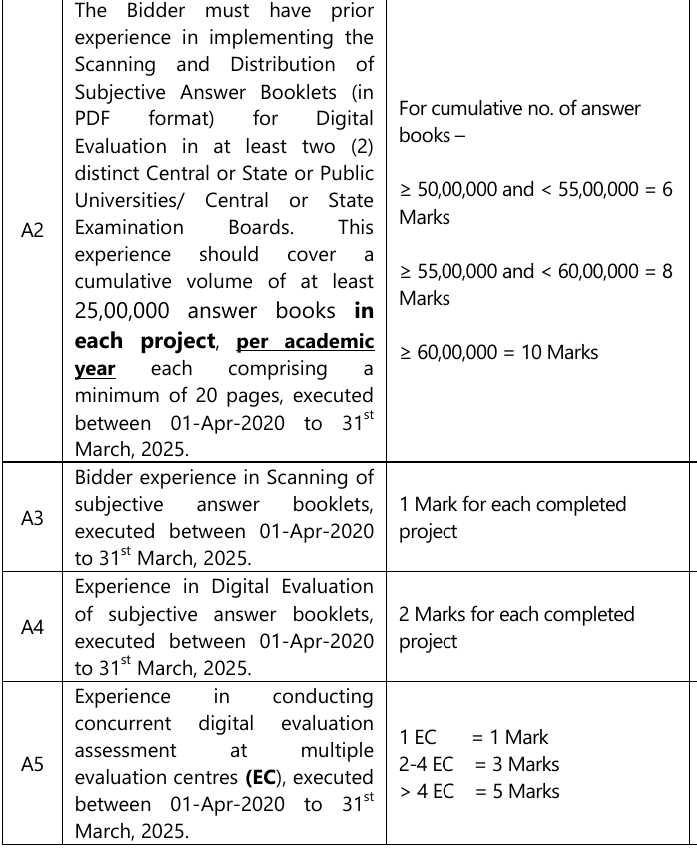
This must have benefited Coempt, just because of the sheer number of Projects they have done.
2. Low workpower was rewarded
in the old rfp, you required a robust team of >100 experienced personnel in software development to get top marks.
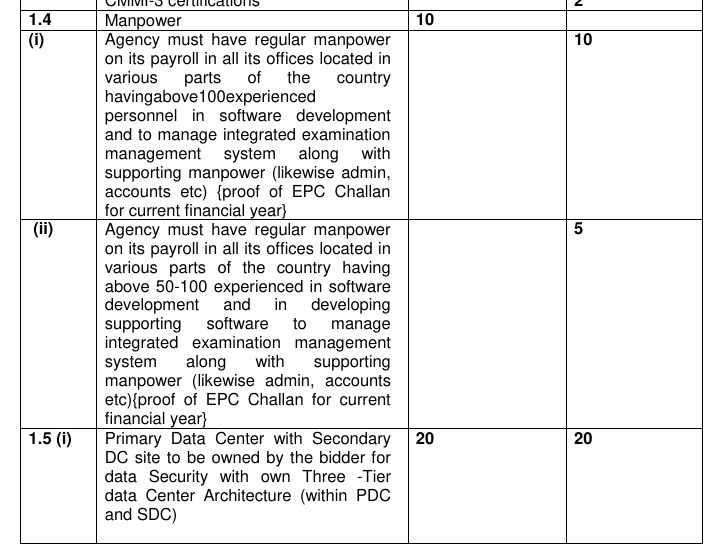
in the new rfp, the bar was lowered significantly, granting maximum points for just having ≥100 total full-time staff, requiring only 15 to have software/tech skillsets
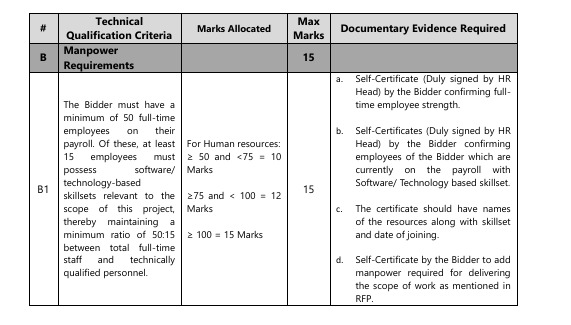 This change made sure that both Coempt and TCS could score highest marks, even without having manpower experienced in software development.
Other Important and Interesting Points
1. Penalty system prioritizes rushed results
The board prioritised volume based penalty instead of accuracy based penalty, that is, in the earlier RfP, in the Penalty Section:
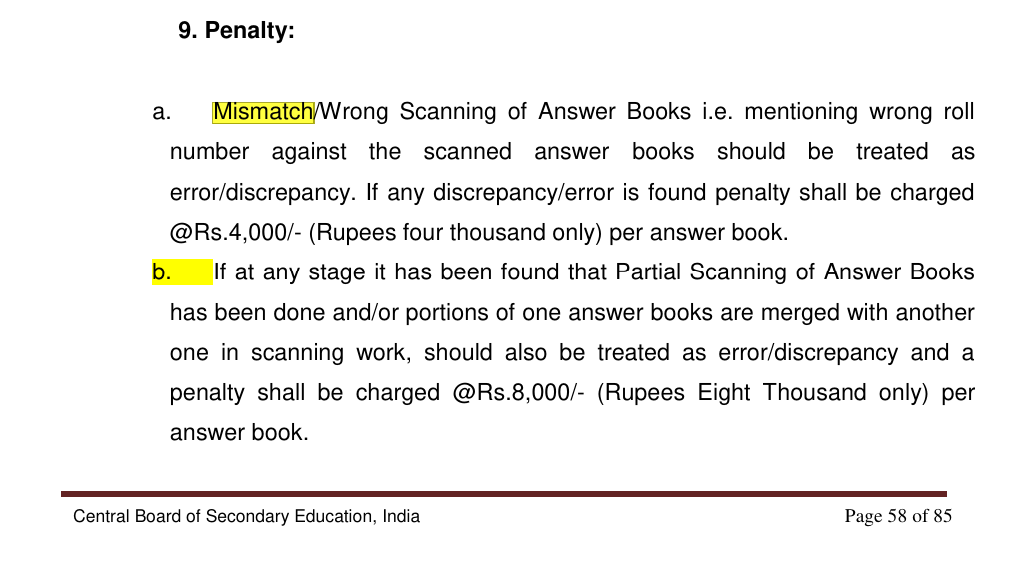
These were the assigned penalties:
- Mismatch/Wrong Scanning: ₹4,000 per answer book.
- Partial/Merged Scanning: ₹8,000 per answer book.
- Un-scanned Books: ₹15,000 per answer book
whereas in the new RfP,
there was no mention of Mismatch Scanning, or Merged Scanning.
Instead, it was replaced with Deadlines and Penalties.
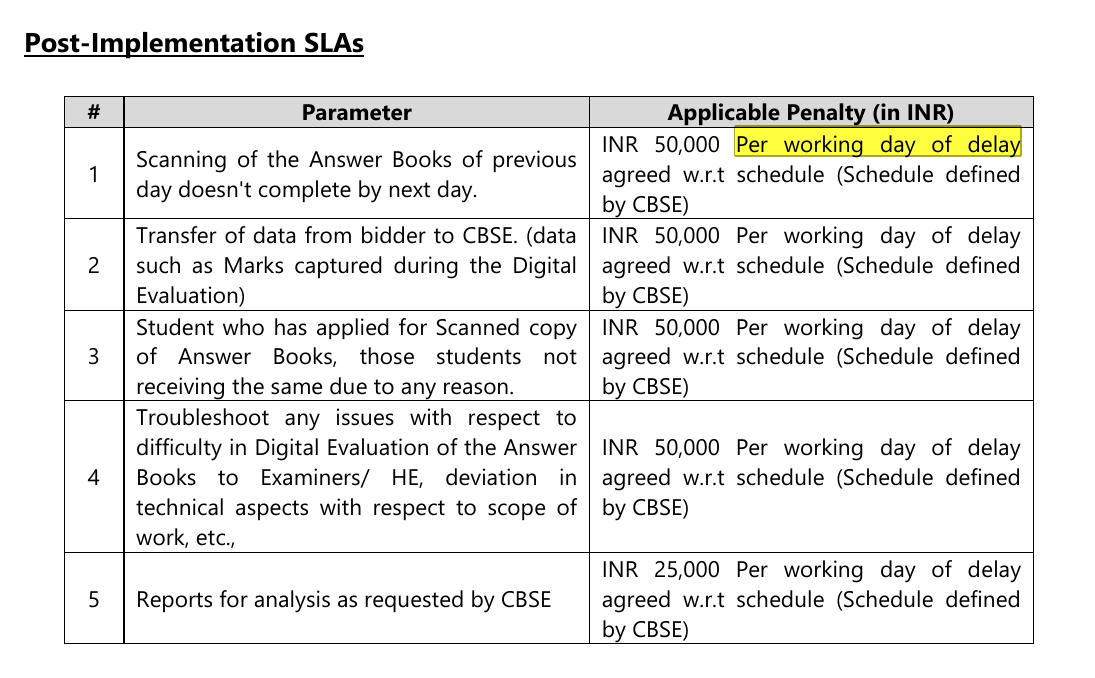 50 thousand rupees fine were levied per working day of delay, while scanning answer books. This would obviously led to rushed scanning of answer books.
This proves that, volume was focused over accuracy and quality.
The Answer sheets that the students wrote, was scanned in rush.
Instead of Penalizing the Vendor for mistakes, CBSE asked the Vendor to fix the mistake on time, they will only be penalized if the mistake can’t be fixed on time. This brought additonal rush.
2. Diluting to Vague Interpretations
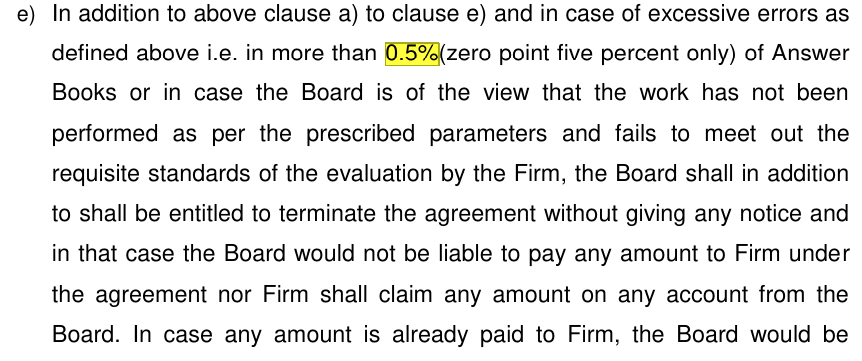
the old rfp had a clause where there was a mathematical threshold, of 0.5%, that is the error rate should not have been more than that. the new rfp has no such mathematical thresholds.
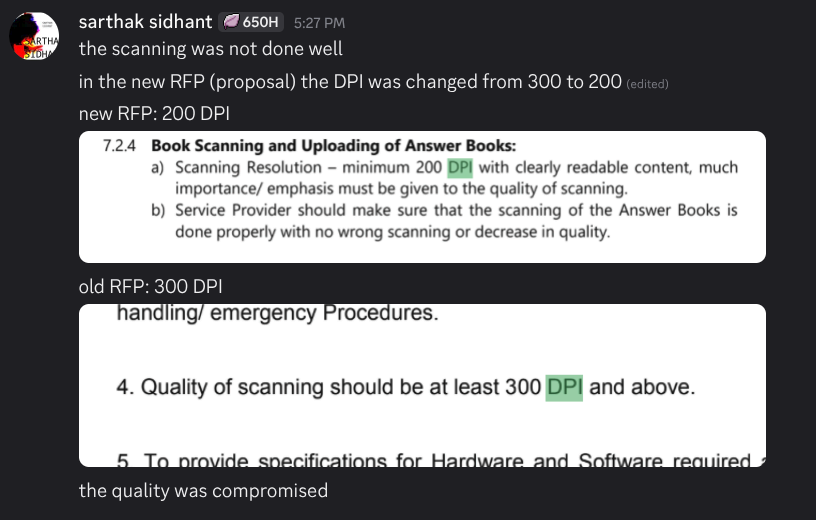
3. decrease in scanner quality and Dilution of Scanner Definition
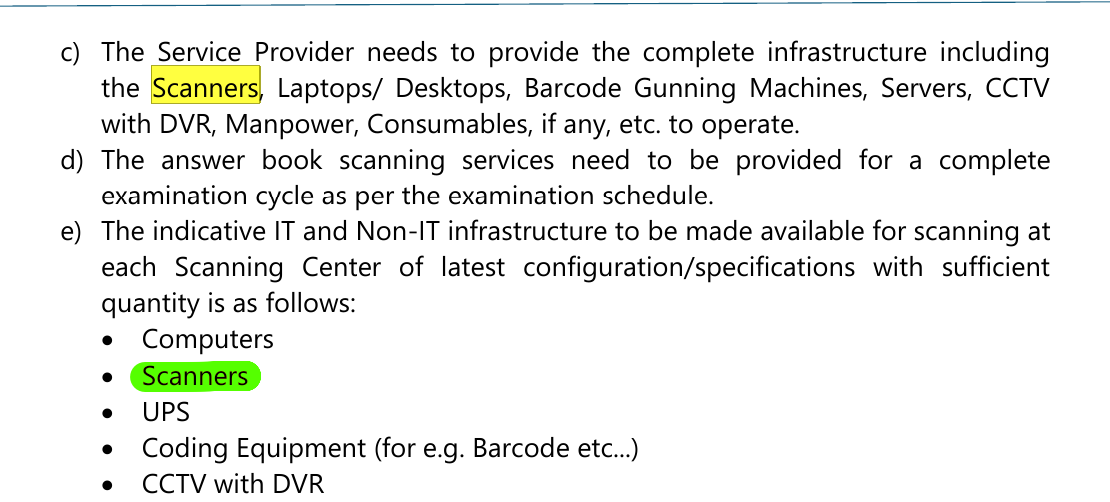
 in the old RfP, “Scanning should be done without cutting the spine of the Answer Booklet by employing the Automatic book/robotics Scanners. All the pages of the booklet should” clearly mentioning Book and Robotics Scanner.
in the new RfP, it just mentions “sufficient scanners”
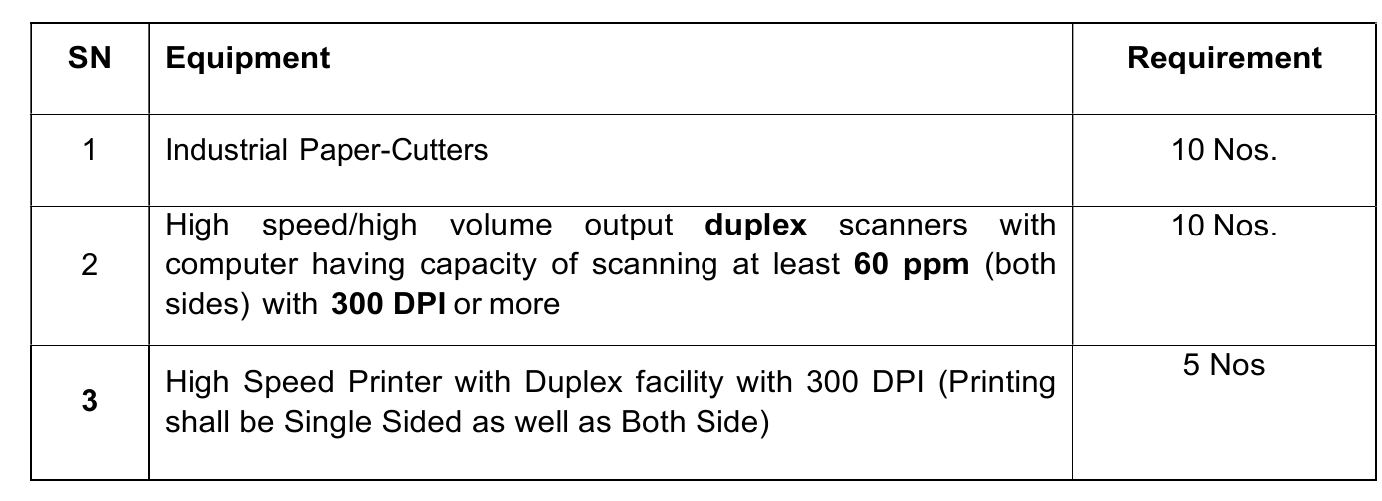
conversely, this is the RfP published by Ranchi’s CBSE RO, check how it clearly mentions high volume output duplex scanner with atleast 60 ppm and 300 DPI
The Quality of Scanning the Answer books, were compromised. since the Term Scanners were Vague-d Down, the Vendor can use whatever quality of scanner that is available to them. It could as well be a phone tied to a stand.
Other definitions were vagued down too.
Final Conclusion
When you map the timeline side-by-side, a clear pattern emerges.
CBSE did not just pick a bad software vendor by accident.
They lowered financial baselines. They dropped software security certifications. They cut the corrupt practices cooling-off period in half. They removed the physical server isolation requirement. They erased the word “Blacklisting” from their penalty matrix via a last-minute corrigendum, before bidding. and They bypassed their own mandatory CERT-In production audits.
They gambled with our data security, our marks, and our mental health. The Institution failed us. I hope this gets covered more. and the institution answers my questions. and provides clarity.
Thanks for reading.
Questions to CBSE
this section would be regularly updated with questions.
end
Terminology used
- NIT (Notice Inviting Tender): Notice issued inviting bidders to come bid on the tender
- RfP (Request for Proposal): The foundational document issued by an organization, the buyer to invite vendors/bidders to submit business proposals. It defines the Project’s scope, technical requirements, evaluation scheme, timeline, and criteria.
- PBC (Pre Bid Clarifications/Conference): This is a formal exchange between the buyer and the prospective bidders to ask questions, clarify doubts, point out ambiguities, within the RfP, and ask for some changes.
- Corrigendum (or Addendum): An official, published amendment to the original tender document. Corrigendums are issued after a PBC to modify project specifications, or change clauses/terms, and conditions, and extend submission deadlines.
- EMD (Earnest Money Deposit): A refundable financial deposit that the bidders must submit alongside their proposal
- BOQ (Bill of Quantities): A highly detailed, itemized list of all materials, labor and services required to complete the project. Bidders use BoQ to calculate their costs and then submit their own BoQ.
- SLA (Service level Agreement): The section of the contract that defines performance standards the vendor must meet, and penalties if they fail to deliver.
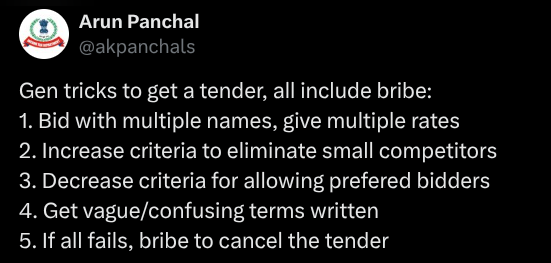
A handy guide to score a tender
patterns and commonly discussed tricks by bidders in rigged procurement ecosystems
A huge thanks to team darshi for working on this with me
enquire more about team darshi by dming me
References
All the Files Related to Tenders are attached in docs/